What is TD?
What Is Turkish Diaspore? — Species, Names & Origin
Turkish diaspore is gem-quality colour-change diaspore from the İlbir Mountains of Türkiye — the same stone also sold as Zultanite, Csarite, Ottomanite or Turkizite.
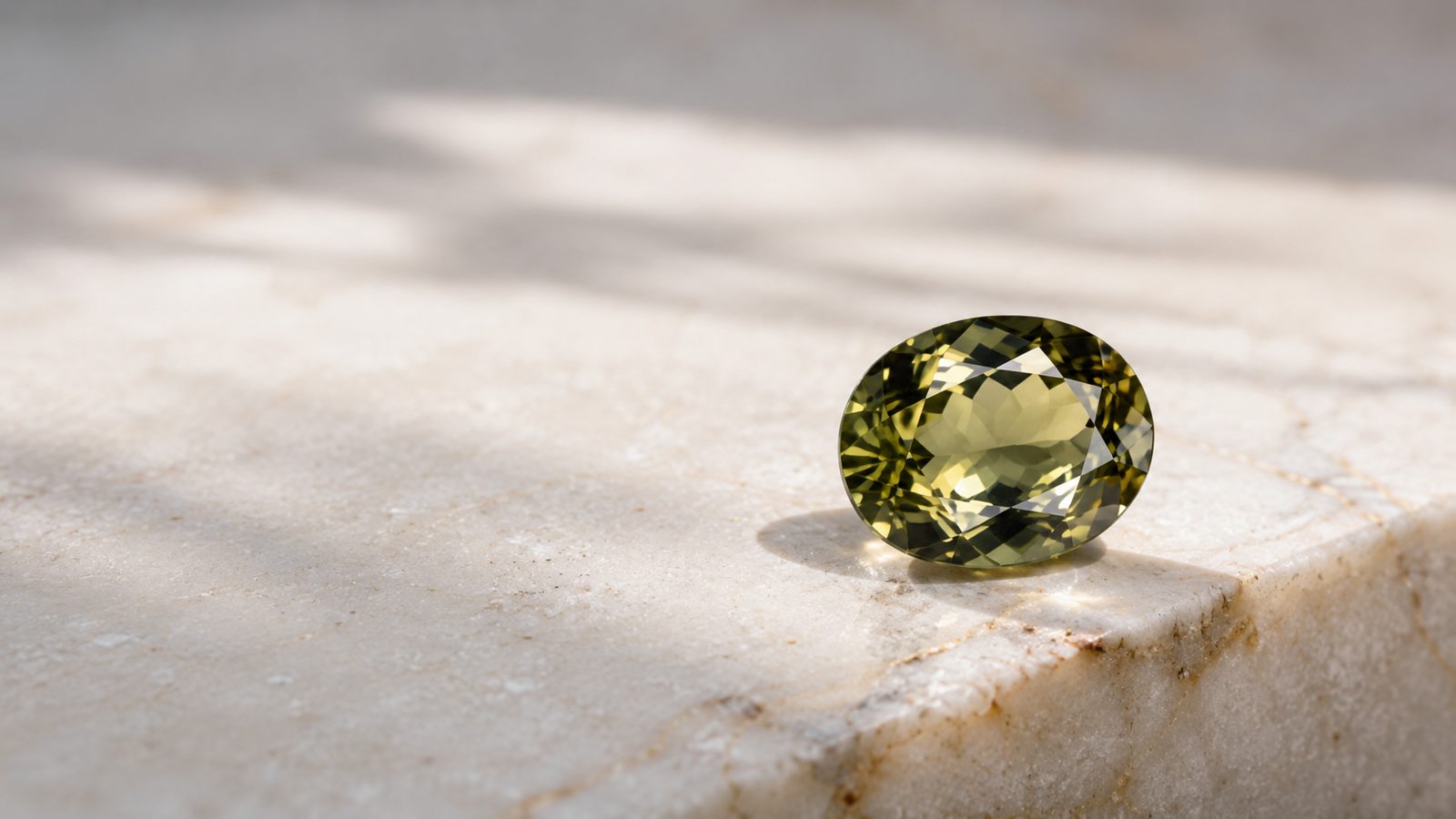
“Turkish diaspore” is not three gems — it is one. Diaspore is the mineral species (α-AlO(OH)); Zultanite is a registered trade name; and Türkiye — specifically the İlbir Mountains of Muğla Province — is the only place currently producing this gem-quality, colour-change material. Put together, the phrase describes gem-quality colour-change diaspore from Türkiye, the same stone also sold as Csarite, Ottomanite or Turkizite.
Three words, one stone
Shoppers often type “Turkish diaspore” because they have seen the same gem described three different ways. Diaspore is the mineral species — an aluminium oxide hydroxide first described in 1801. Zultanite is a modern trade name applied to the rare, transparent, colour-changing gem grade of that species. Turkish points to the origin: to date, all gem-quality colour-change diaspore comes from one country. A useful rule from the trade: all Zultanite is diaspore, but not all diaspore is Zultanite. Most diaspore is ore-grade and never sees a cutting wheel.
Origin: the İlbir Mountains
Gem-quality colour-change diaspore is a single-source gem. It is mined in the İlbir Mountains of Muğla Province in south-western Türkiye, in the Menderes Massif region, at high elevation. No other locality currently produces gem material of this quality and colour behaviour in commercial quantity. That single-source character is the honest basis of the gem’s scarcity — a geological fact, not a slogan: the deposit is narrow, output is low, and the mineral’s perfect cleavage removes much of the rough before it ever becomes a faceted stone.
The trade names
Four trade names describe the same Türkiye-sourced gem diaspore. Zultanite® and Csarite® are registered marks; Ottomanite and Turkizite circulate for the same material. The differences between them are commercial — trademark holder, marketing position, price band — not gemological. A buyer choosing a stone labelled Csarite is buying the same species as one labelled Zultanite. Mineralogically, the correct name is simply colour-change diaspore.
How the colour change works
The effect is the alexandrite effect — the same phenomenon named for the chrysoberyl variety in which it was first catalogued. It is not a treatment. Trace elements, chiefly manganese with iron, give the crystal an absorption pattern that interacts differently with different light. Under daylight or fluorescent light it reads kiwi-to-sage green; under incandescent or candlelight it shifts to champagne, light gold, or raspberry-pink. The crystal does not change — the light does, and the stone’s selective absorption sorts what remains. More on the optics →
Judging quality and authenticity
Four things drive quality, roughly in order: strength of the colour change, clarity, cut (cutters orient the stone to the optic axis to maximise the change, sacrificing weight), and carat weight. On authenticity, imitations exist — GIA has documented colour-change glass sold as “Zultanite”, and lab-grown diaspore has been produced. The reliable check is documentation: an independent laboratory report identifying the species as diaspore with natural, untreated colour change. See the buying & authenticity guide.
Wearing and caring for it
At 6.5–7 on the Mohs scale, gem diaspore sits in the same band as tanzanite and peridot — fine for jewellery, with one caveat: its perfect cleavage means a sharp knock along the {010} plane can split a stone that corundum would shrug off. Favour protected settings, and avoid ultrasonic and steam cleaning. Full guidance is in the care guide.
TurkishDiaspore.org is an independent educational resource and is not affiliated with the Zultanite® or Csarite® trademark holders.
Sources & Further Reading
Have a question about Turkish diaspore?
We’re here to help you learn more about the stone, not to sell it.